2 min to read
Digital technologies timeline
Digital technologies emerging trends with cellular networks
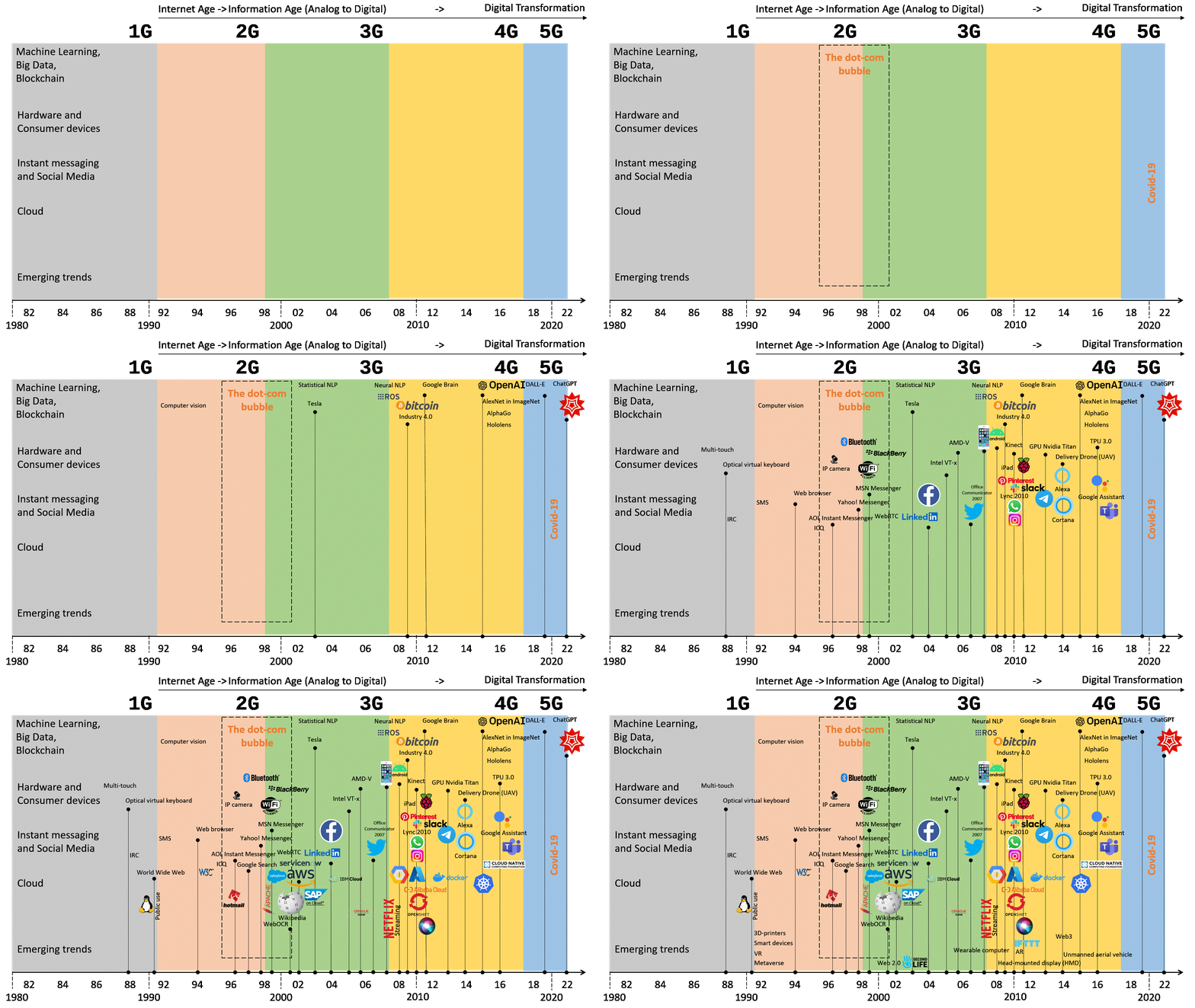
Figure 1.1 : Digital Technologies timeline
Today, every company is a software company, and every job requires computing.
When the internet was available for public use, companies started having a .com domain for their web presence to showcase their products and services. That was the era of the dot-com bubble when Wikipedia was born. Amazon started selling books to begin shopping online portal, eBay started the online auction, grew as an e-commerce site, and the first free webmail Hotmail, RocketMail (Yahoo! mail). Google Search has become central to the world wide web, and B2B and B2C emerged as e-commerce models.
Though the dot-com bubble burst in Mar 2000 but marked a shift to the internet age with innovations in the IT industry; Web browsers, Instant messaging, IP Cameras, Bluetooth, Wi-Fi, Smartphones, WebRTC, WebOCR, etc.
Several advancements are witnessed with each generation of cellular networks, as shown in figure 1.1. This figure illustrates underlying technological trends that laid the foundation of digital transformation. The proliferation of internet-connected devices, availability of high-speed broadband, and cloud computing are precursors to digital transformation. With the 3G spectrum and advancements in virtualization technology, Cloud computing and social media have emerged as new business opportunities in the information age. No company can imagine its existence without IT. There are no geographical boundaries today and none looking back. The IT revolution has massively impacted how we do business, like the industrial revolution of the 18th century.
In the digital age, not only do companies need a web presence, but they also need social media presence. Digital marketing was born for managing social media campaigns. With geographical boundaries converging, we are living in an always-on economy.
| Internet users | 2005 | 2010 | 2017 | 2019 | 2021 |
|---|---|---|---|---|---|
| World population | 6.5b | 6.9b | 7.4b | 7.75b | 7.9b |
| Worldwide | 16% | 30% | 48% | 53.6% | 63% |
| Developing world | 8% | 21% | 41.3% | 47% | 57% |
| Developed world | 51% | 67% | 81% | 86.6% | 90% |
Internet users hit 7.9 billion in 2021; a massive user base is a reason for the growing popularity of social media and online platforms to connect with customers. Big data has emerged with advancements in Cloud storage (according to Kryder’s law) and the need to manage data generated exponentially by organizations and individuals. Data is the new oil (Robert Humby, 2006) in the global digital ecosystem though there is a growing concern over digital sovereignty.
This is an excerpt from my thesis that I am writing on Cloud transformation and the relevance of Low-code/No-code platforms for business agility.
If you are interested in Citizen Development, refer to this book outline here on Empower Innovation: A Guide to Citizen Development in Microsoft 365
| Now, available on | ||||
|---|---|---|---|---|

|
||||

|
||||

|

|

|

|

|
If you wish to delve into GenAI, read Enter the world of Generative AI
Also, you can look at this blog post series from various sources.
Stay tuned! on Generative AI Blog Series
We are advocating citizen development everywhere and empowering business users (budding citizen developers) to build their own solutions without software development experience, dogfooding cutting-edge technology, experimenting, crawling, falling, failing, restarting, learning, mastering, sharing, and becoming self-sufficient.
Please feel free to Book Time @ topmate! with our experts to get help with your Citizen Development adoption.



Comments